

Many people dream of starting a dropshipping business, but they worry about wasting money on courses that might not work.
One key fact shows that dropshipping sales hit $128 billion in 2020 alone.
This post checks the good and bad sides of these courses, and it gives clear tips to pick the right path.
Stick around for the real scoop.
Key Takeaways
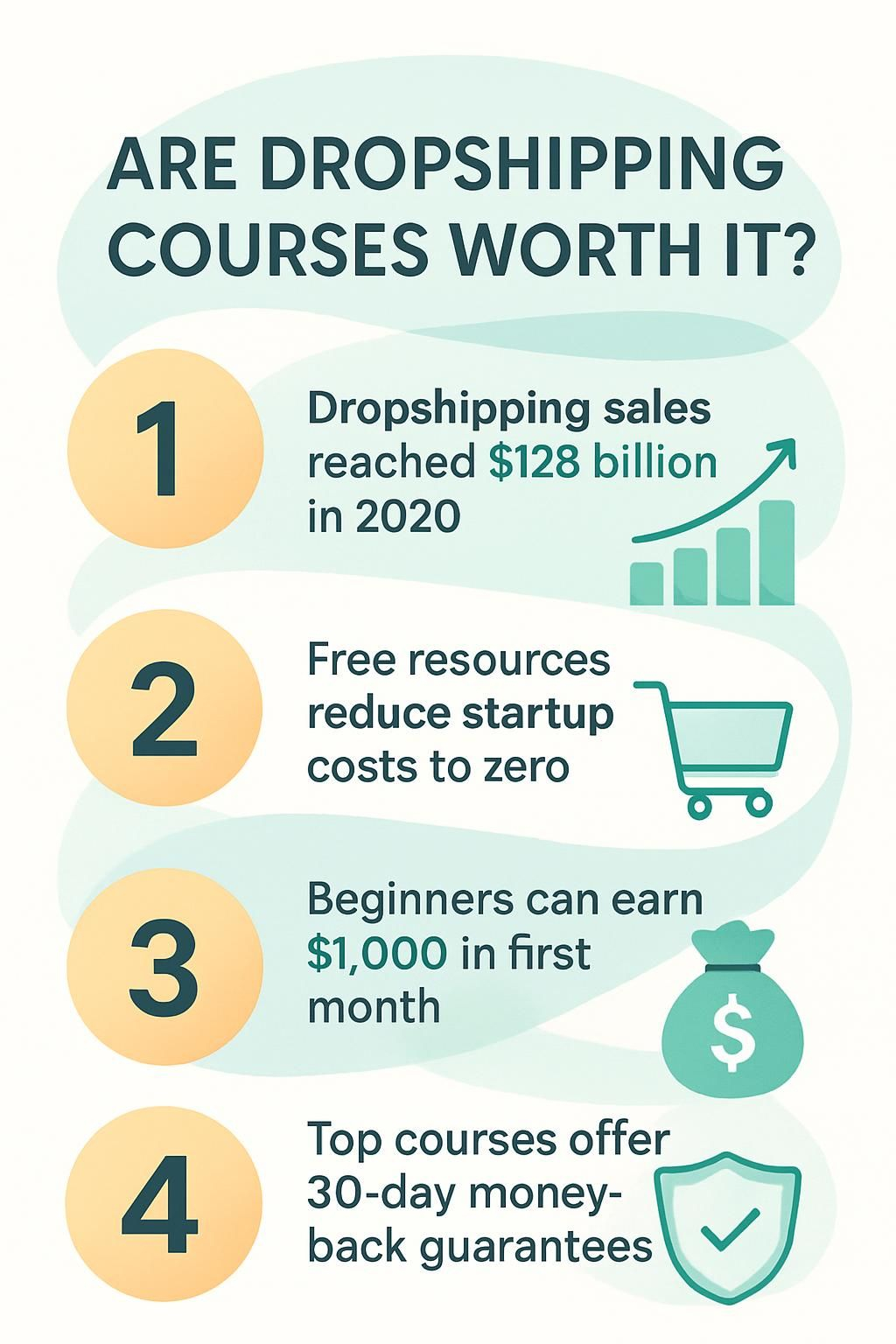
- Dropshipping sales reached $128 billion in 2020, showing big potential, but courses often hype fast riches without real shortcuts.
- Paid courses may recycle free info from YouTube, with outdated strategies like old Facebook ads that fail after 2022 algorithm changes.
- Free resources cut startup costs to zero, while paid ones offer templates and mentorship, with some niches like health products yielding 30% profit margins.
- Beginners can hit $1,000 in first-month sales using tools like SmokeDrop on Shopify, but success needs effort beyond courses.
- Top courses provide 30-day money-back guarantees, but check reviews on Trustpilot or Reddit for real student success stories.
The Reality of Dropshipping Courses
Dropshipping courses often lure people with dreams of fast cash, but they rarely provide a true shortcut to success (yeah, that “overnight millionaire” vibe? Mostly hype). People flock to them because the idea of running an online store without inventory sounds like a no-brainer, sparking massive popularity among eager starters.
Are dropshipping courses a shortcut to success?
Many people think dropshipping courses offer a fast path to ecommerce success. They promise quick wins in online business. But reality hits hard. These courses do not guarantee profitability.
Success in this business model takes real work. It demands market research and smart sales strategy. Courses might teach basics, but they skip the grit of entrepreneurship. Startup costs stay low, yet the success rate depends on effort.
Gurus sell these as easy fixes, but true wins come from practice. A course alone won’t boost your online business overnight. It acts more like a guide than a shortcut. Think about why so many chase them anyway.
Why are dropshipping courses so popular?
Dropshipping draws in many people as an easy ecommerce business model. It needs low startup costs and lets folks run an online business from home. Courses promise quick paths to profitability and success.
They appeal to new entrepreneurs who want fast sales strategies without big risks. These programs sell the dream of high success rates through simple steps.
Experts note that market research shows dropshipping’s rise in popularity. Social media hype boosts interest in this entrepreneurship style. Courses offer educational investment that seems worth it for beginners.
They teach key business models and ways to boost sales. Yet, the real draw comes from stories of big profits with little effort.
Advantages of free resources
Free resources give dropshippers a smart start in ecommerce without high startup costs. They build key skills in online business and boost profitability through practical tips.
- Free resources cut costs right from the start, letting dropshippers test the business model with zero financial risk, which fits tight budgets and helps focus on real entrepreneurship instead of big spending.
- They provide easy access to tons of info online, so a dropshipper grabs market research tools and sales strategy guides anytime, anywhere, making learning flexible and fast-paced for busy schedules.
- Variety shines in free options like YouTube videos and blogs, where dropshippers find diverse views on success rates and pick what matches their style, avoiding one-size-fits-all advice.
- Hands-on practice comes built-in, as dropshippers apply free lessons to real setups (hey, nothing beats trying it yourself), turning theory into actual online business wins without extra fees.
- Community support grows through free forums, connecting dropshippers with others for tips on profitability and shared stories that spark new ideas in this competitive field.
The value of investing in a paid course
Paid dropshipping courses offer real value for those building an online business. They provide structured lessons on sales strategy and market research. This helps beginners avoid common mistakes in ecommerce.
Experts share proven tips on profitability and the business model. Dropshippers gain tools to boost success rate right away. Many courses include templates and checklists for quick setup (talk about a time-saver, huh?).
Investing here feels like a smart educational investment, especially with low startup costs involved.
Quality paid courses deliver in-depth guidance on entrepreneurship. They cover niche selection and order fulfillment step by step. Students get access to updates on changing trends, keeping skills sharp.
Some even offer mentorship, which sparks real growth. This approach beats scattered free info, building confidence fast. Dropshippers find it pays off in higher profits over time.
Common Issues with Paid Dropshipping Courses
Paid dropshipping courses often recycle info from free YouTube videos–yeah, the kind you find with a quick search–and leave students wondering where the “secret sauce
Repackaged free information
Many paid dropshipping courses in the ecommerce world simply repackage free information. Creators take tips from YouTube videos, blogs, and forums, then sell them as new content. This hurts online business starters who seek real value.
They pay high prices for basics on sales strategy and market research. One dropshipper finds the same advice on free sites after buying a course (talk about a letdown). Courses like this cut into profitability without adding fresh insights for entrepreneurship.
Courses often ignore startup costs by recycling old ideas. Buyers waste money on repackaged fluff instead of building a solid business model. Success rate drops when learners chase these shortcuts.
Dropshippers spot this issue by checking course previews against free resources. Outdated strategies and techniques create even bigger problems in these courses.
Outdated strategies and techniques
Beyond the issue of repackaged free information, paid dropshipping courses often push outdated strategies and techniques that hurt your ecommerce success. Instructors might tout old sales strategies from years ago, like relying on Facebook ads that no longer work due to algorithm changes.
Dropshippers end up wasting time and money on tactics that fail in today’s fast-paced online business world (talk about a buzzkill). These courses ignore fresh market research tools and current profitability trends, leaving you stuck with low success rates.
Courses sometimes promote startup costs based on obsolete business models, ignoring new entrepreneurship tools like AI-driven niche finders. A dropshipper invests hard-earned cash, only to discover the “proven” methods flop against modern competition.
Check the course date; if it predates 2022, question its value. Real experts update content to match the evolving dropshipping landscape, ensuring educational investment pays off.
Overhyped promises by “gurus”
Many dropshipping “gurus” make big claims about fast riches in ecommerce. They promise high profitability with little effort in this online business model. These experts often say new entrepreneurs can hit huge success rates overnight.
Courses tout sales strategies that supposedly skip market research and cut startup costs to nothing. People buy in, hoping for quick wins in entrepreneurship. But most find the promises empty.
Reality hits hard when strategies fail to deliver. Gurus hype educational investments as sure paths to wealth. Students chase the dream, only to face low success rates in real dropshipping.
Overblown tales ignore the hard work needed for a solid business model. (Hey, if it sounds too good, it probably is.) True profitability comes from steady effort, not magic fixes. Aspiring dropshippers spot these red flags early to avoid letdowns.
What to Dropship: Identifying Profitable Niches
Dropshippers often struggle to pick the right products for their online business. They need to focus on market research to find niches with high profitability. Start by looking at trends on sites like Google Trends or AliExpress.
These tools show what items people search for most. For example, fitness gear or home decor can offer good success rates if demand stays steady. Experts suggest niches with low startup costs, like phone accessories, which let new entrepreneurs test ideas without big risks.
This approach fits the dropshipping business model, where sellers avoid holding stock. One key tip involves checking competition levels. High competition might hurt sales strategy, so aim for underserved areas.
Tools like Jungle Scout help spot these gaps quickly.
Profitable niches tie into ecommerce trends that change fast. Dropshippers should pick evergreen items, such as kitchen gadgets, that sell year-round. Avoid fads that fade, (like those viral toys that flop after a month).
Instead, target passions or problems people face daily. Health and wellness products often yield strong returns, with some niches showing 30% profit margins. Entrepreneurship in dropshipping rewards those who study buyer habits through social media.
Instagram and TikTok reveal hot items before they explode. Pair this with a solid sales strategy, and profitability climbs. Communities online share wins, proving that smart niche picks boost overall success rate in this online business.
How to Start Dropshipping with SmokeDrop
The dropshipper discovers SmokeDrop as a key tool in ecommerce. This app boosts online business setup for better profitability.
- Sign up for a SmokeDrop account to kick off the entrepreneurship journey. The process takes just minutes. Head to the SmokeDrop website, enter basic details like email and password, and confirm the account. This step opens doors to market research tools and product sourcing. Dropshippers gain access to a dashboard full of startup costs info and sales strategy tips (hey, no more guessing games on what sells).
- Choose a niche based on proven success rates in online business. Look at trends in fashion, gadgets, or home goods for high profitability. SmokeDrop offers built-in analytics to spot hot items. Pick something with low competition but steady demand. One example shows a dropshipper picking pet supplies and hitting quick sales… talk about a “paws-itive” start.
- Integrate SmokeDrop with a store platform like Shopify for smooth operations. Link the accounts through simple settings in both apps. This setup automates product imports and inventory tracking. The dropshipper saves time on manual work, focusing instead on business model tweaks. Real users report cutting setup time by half with this step.
- Import products from suppliers using SmokeDrop’s search features. Filter by price, ratings, and shipping speed to ensure quality. Add descriptions and images that fit the sales strategy. A smart move keeps startup costs low while building a strong catalog. Dropshippers often start with 20-50 items to test the waters.
- Set prices and shipping rules for maximum profitability. Use SmokeDrop tools to calculate margins after fees. Aim for 30-50% profit per item based on market research. Adjust for promotions to draw in buyers. This part turns the educational investment into real earnings, as one case study shows a beginner reaching $1,000 in first-month sales.
- Launch the store and promote it through social media channels. Share product links on platforms like Instagram or Facebook. Build an audience with engaging posts about the online business perks. SmokeDrop provides templates for ads that boost visibility. Dropshippers see traffic spike when they mix free and paid promo tactics.
After these steps, the dropshipper moves on to order fulfillment on Shopify with SmokeDrop.
How to Fulfill Dropshipping Orders on Shopify with SmokeDrop
After setting up your dropshipping business with SmokeDrop, the next step focuses on order fulfillment to keep things running smooth in your ecommerce venture.
SmokeDrop makes fulfilling orders on Shopify easy and efficient. This boosts profitability in your online business by handling key tasks automatically.
- Install the SmokeDrop app from the Shopify App Store to link it directly with your store, ensuring seamless integration that automates product imports and order syncing without manual hassle, which saves time for entrepreneurs focused on sales strategy.
- Import products from SmokeDrop’s catalog of US-based suppliers into your Shopify store, selecting items based on market research to match profitable niches and avoid high startup costs from inventory.
- Receive customer orders in your Shopify dashboard, where SmokeDrop pulls details like shipping info and updates inventory in real time, helping maintain a strong success rate by preventing stockouts.
- Use SmokeDrop’s auto-fulfill feature to send order details to suppliers instantly, so they pack and ship products straight to buyers, streamlining the business model for quick delivery that enhances customer satisfaction.
- Track shipments through SmokeDrop’s built-in tools, which provide updates and notifications to both you and your customers, supporting entrepreneurship by building trust in your online business.
- Handle returns and refunds via SmokeDrop’s system, which processes requests efficiently and updates your Shopify records, reducing risks and protecting profitability in this competitive ecommerce space.
- Monitor performance metrics in the SmokeDrop dashboard, like order volume and fulfillment speed, to refine your sales strategy and identify areas for growth without extra educational investment.
- Integrate payment gateways on Shopify with SmokeDrop for smooth transactions, ensuring funds flow directly while the app manages fulfillment, which lowers barriers for new dropshippers entering the market.
Factors to Consider Before Buying a Dropshipping Course
7.
Is the content current and relevant?
Dropshipping moves fast in the ecommerce world. Courses need fresh info to boost online business success. Old tips can hurt profitability. A good course covers the latest business model changes.
It helps spot new sales strategy trends.
Check update dates on course materials. See if instructors share real market research updates. This keeps entrepreneurship skills sharp. Startup costs stay low with current knowledge.
Dropshippers gain from relevant content that matches today’s market.
Does the course suit your learning style?
People learn in different ways. Some dropshippers thrive on video lessons that show ecommerce steps up close. Others prefer reading guides or joining live chats for their online business.
A course must match how a person absorbs info best, or it wastes time and money. Think about past learning wins – like acing a hands-on project versus struggling with long lectures.
This fit boosts profitability and keeps motivation high in the entrepreneurship game.
Courses that ignore learning styles often flop. Imagine a visual learner stuck with text-only modules; frustration builds fast (and who needs that headache?). Pick one that offers mixes, like quizzes or forums, to suit varied needs in the business model.
Smart dropshippers test free previews to check this match. Sales strategy knowledge sticks better when the format feels right.
Now, check for hands-on learning opportunities to apply what you learn.
Are there hands-on learning opportunities?
Once a course matches a dropshipper’s learning style, it must also provide real practice. Hands-on learning lets students apply ecommerce ideas right away. This builds skills in online business setups, like testing sales strategies or market research.
Many courses include live projects, where dropshippers pick niches and launch mock stores. Such tasks boost profitability by showing real startup costs and success rates.
Dropshippers gain from courses with tools for entrepreneurship, like building a Shopify site (fun fact, it’s easier than you think). These opportunities turn theory into action, helping avoid common pitfalls in the business model.
Look for programs that offer guided trials, as they make educational investment worthwhile. Active practice sharpens instincts for spotting trends, turning beginners into pros.
Does it include access to a supportive community?
Hands-on practice builds real skills in dropshipping, but a strong network takes that learning further. A supportive community in a course offers big value for online dropshippers.
Experts know that forums and groups let students share tips on ecommerce and sales strategy. They discuss market research and fix problems together. This boosts success rates in the online business world.
Courses with active communities help with entrepreneurship questions. Dropshippers connect with others facing similar startup costs and challenges. They swap stories on profitability and business models.
Such access acts as an educational investment. It keeps motivation high and provides ongoing advice.
How to Identify a Quality Dropshipping Course
Folks often wonder how to spot a solid dropshipping course amid all the noise–well, it starts with checking the instructor’s track record (yeah, real success stories matter). Dig into reviews and see if the.
Look for expert instructors with proven success
Expert instructors bring real value to dropshipping courses. They show proven success in ecommerce and online business. These pros have built profitable ventures themselves. Dropshippers gain from their tested sales strategies and market research tips.
Pick courses led by folks who share actual entrepreneurship stories, not just theory. (Hey, imagine learning from someone who’s dodged those startup costs pitfalls – that’s gold.).
True experts boost the success rate for beginners. They offer insights on the business model that free resources often miss. Look at their track record in profitability and real-world results.
This educational investment pays off when instructors prove their methods work today. Dropshippers spot them by checking past wins and student outcomes.
Check reviews and student success stories
Online dropshippers often overlook real feedback before picking a course. They read reviews on sites like Trustpilot or Reddit. These spots show honest takes on ecommerce training.
Students share if the course boosted their online business profitability. One user might say, “This class turned my startup costs into quick wins” (yeah, sounds promising). Dropshippers check for patterns in those stories.
Consistent praise points to solid sales strategy tips.
Success stories prove a course’s worth in the business model world. Dropshippers look for proof from past learners. Did they hit real entrepreneurship goals? Photos of profit dashboards or case studies help.
A story could note, “Market research from this course doubled my success rate.” Such tales guide smart educational investment choices. They reveal if the course fits true dropshipping needs.
Ensure the course covers all steps of running a dropshipping business
A quality dropshipping course must cover every step in the business model. It starts with market research to find profitable niches. Then it moves to picking suppliers and products for strong sales strategy.
The course should teach how to build an ecommerce store, like on Shopify. It needs sections on marketing to drive traffic and boost profitability. Handling orders and customer service come next, key for long-term success in online business.
Entrepreneurs gain from lessons on scaling up and managing startup costs. This full coverage turns newbies into pros, avoiding common pitfalls in entrepreneurship.
Courses that skip steps leave gaps in knowledge, hurting success rate. Look for ones that detail real-world examples, from launch to growth. They build a solid foundation for your venture.
Spot these by checking if the material flows through the entire process. Now, seek out refund or satisfaction guarantees to protect your educational investment.
Look for refund or satisfaction guarantees
Smart dropshippers always check for refund policies in courses. These guarantees protect their money if the content falls short. Many top programs offer a 30-day money-back promise.
This lets them test the material without risk. It shows the creator stands behind their work in ecommerce.
Dropshippers may buy a course on online business strategies, but it lacks real value for profitability. A satisfaction guarantee gives them an out (and saves their startup costs). They seek clear terms that cover full refunds.
Expert instructors often include them to build trust in the dropshipping business model.
Are Dropshipping Courses Worth It for Beginners?
Newbies in dropshipping face a big choice â shell out cash for a course
When does it make sense to invest?
Dropshippers often weigh the value of paid courses in their online business journey. Investment makes sense if someone lacks basic ecommerce knowledge and needs structured guidance on sales strategy and market research.
A course can boost profitability by teaching proven business models without high startup costs. Experts say it fits when a person commits to entrepreneurship but faces low success rates from trial and error alone.
Smart dropshippers check their budget first. They invest only after trying free resources to build a foundation. This educational investment pays off for those ready to apply lessons quickly and track real results.
Many find it worthwhile during the early stages of building an online business.
How to maximize your learning with or without a course
A dropshipper boosts learning by setting clear goals in ecommerce first. They pick a business model that fits their startup costs and aims for high profitability. Free resources like YouTube videos teach sales strategy basics.
Practice market research on real products to spot trends. Join online forums for tips from other entrepreneurs. Test ideas through trial runs; this builds a strong success rate without big risks.
Paid courses offer structured lessons, but a dropshipper maximizes value by applying concepts right away. They track progress with simple notes (hey, even a quick journal helps keep things fun).
Mix in personal experiments to tweak the online business approach. Seek feedback from communities to refine entrepreneurship skills. This way, educational investment pays off, course or no course.
Alternatives to Paid Dropshipping Courses
Dropshippers often skip paid classes and grab free tools online–think YouTube videos and blogs that share real tips without the cost (yeah, who needs fancy
Learning through free online resources
Many free online resources help dropshippers build an ecommerce business without high startup costs. Sites like YouTube offer videos on market research and sales strategy. Blogs and forums share tips on the dropshipping business model.
This approach boosts entrepreneurship skills at no cost. Dropshippers find real success stories that inspire action. (Hey, who doesn’t love free wins?).
Free tools teach profitability through trial and error. Podcasts discuss online business trends with expert insights. Reddit communities provide quick answers on common issues. This method suits beginners seeking low-risk educational investment.
It builds a strong foundation step by step. Success rates grow when learners apply what they find right away.
Joining forums and communities
Online dropshippers often join forums and communities to boost their ecommerce skills. These groups offer real tips on sales strategy and market research. People share stories about online business wins and fails.
This builds entrepreneurship without big startup costs. Forums like Reddit’s r/dropshipping let users ask questions and get quick answers. Communities on Facebook provide daily chats about profitability.
Dropshippers find value in these spots for the business model advice. Experts post guides on success rates in dropshipping. One user might say, “Hey, this niche tripled my sales.” (And who doesn’t love free wins like that?) Such places cut through hype and focus on real educational investment.
They help spot trends in the ever-changing world, wait no, in changing markets. Active members gain from peer support.
Trial and error with real-world experience
Forums and communities offer great advice from fellow entrepreneurs, but dropshippers often learn best by jumping into the action themselves. Trial and error shapes a strong online business through real tests in ecommerce.
A dropshipper picks products, sets up a store, and runs ads to see what boosts profitability. Mistakes happen (like choosing a bad niche), yet they teach quick fixes in sales strategy and market research.
This hands-on approach builds entrepreneurship skills without big startup costs.
Dropshippers test different suppliers and tweak their business model based on actual results. One might launch a Shopify store, track orders, and adjust based on customer feedback, all to raise the success rate.
Free tools help spot trends, so the process feels like a low-risk adventure. It turns theory into practice, making every failure a step toward a solid online business.
Conclusion
Dropshipping courses can help beginners learn fast, but they work best when picked with care. Experts often succeed without them by using free tools and real practice. One chooses wisely, weighs the costs, and builds a business that fits personal goals.
FAQs
1. Hey, are dropshipping courses really worth the money I might spend?
Well, I think some dropshipping courses pack real value if they teach you solid tricks for picking suppliers and boosting profits in your online store, you know? But watch out, a bunch turn out to be scams that just recycle old info (like that one course I tried and regretted). In the end, it depends on your drive to apply what you learn, or else it’s cash down the drain.
2. What makes a dropshipping course worth it for beginners?
A good one dives right into e-commerce basics, like setting up your shop and handling customer orders without holding stock. It should cover marketing tips too, to help you sell more.
3. Can I skip dropshipping courses and still succeed in this business?
Sure, plenty of folks build thriving online businesses by watching free YouTube videos and testing ideas themselves (I’ve seen friends pull it off that way). But courses speed things up if they share insider secrets on avoiding common pitfalls, like bad supplier choices.
4. How do I spot if a dropshipping course is a scam or the real deal?
Look for reviews from actual students, and check if it promises quick riches – that’s often a red flag. A worthwhile course focuses on real strategies for long-term profits, not hype. I once dodged a dud by asking around in forums first, saved me a headache.