
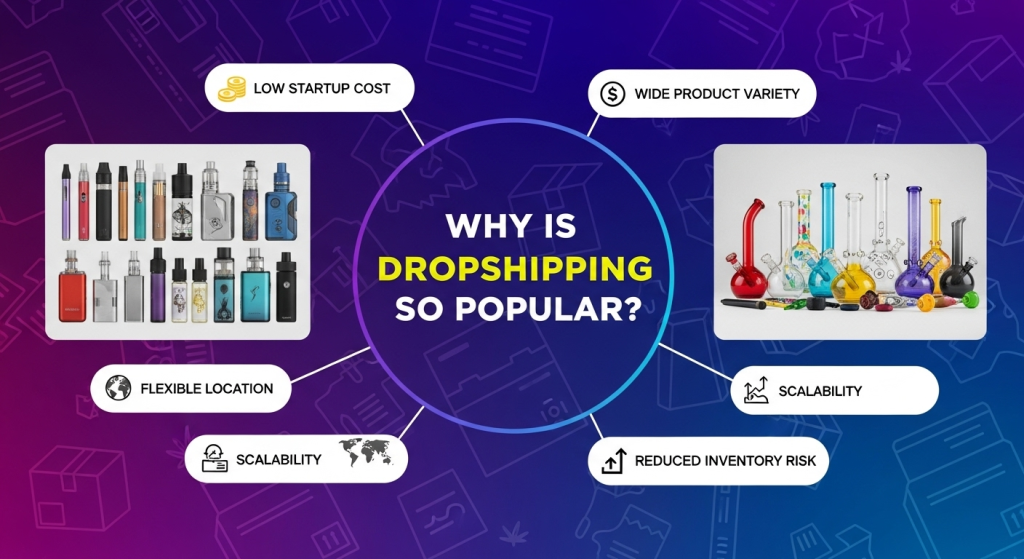
Many folks want to start an online business but face big hurdles like cash shortages and storage woes. Dropshipping now powers over 30 percent of all e-commerce sales worldwide. This post breaks down the top reasons for its rise and shares easy tips to jump in.
Stick around for the full scoop.
Key Takeaways
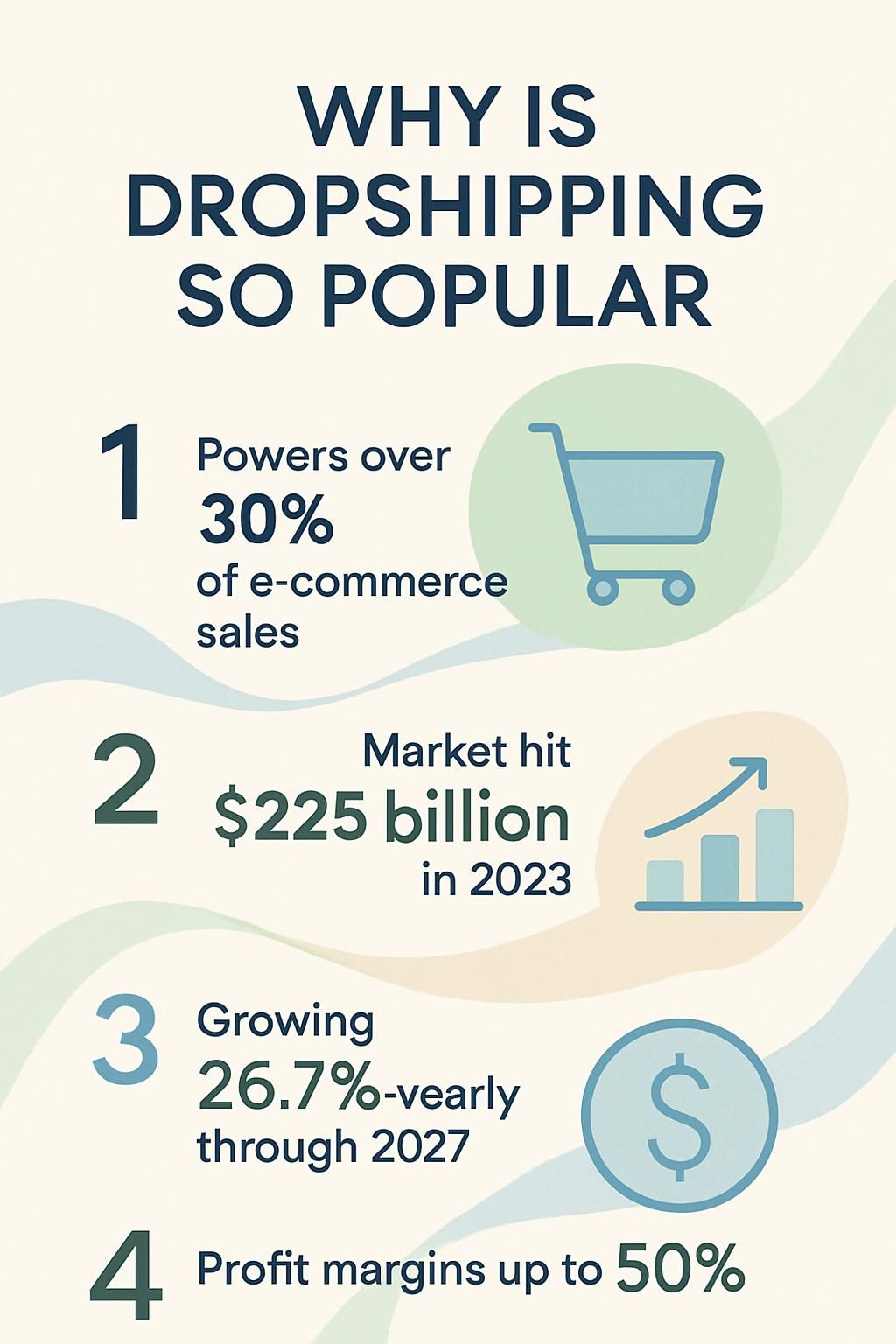
- Dropshipping powers over 30 percent of all e-commerce sales worldwide.
- The global dropshipping market hit $225 billion in 2023 and aims for $591 billion by 2027, growing at 26.7% yearly per Statista data.
- E-commerce sales reached over $5 trillion worldwide in 2022, boosting dropshipping’s popularity.
- Startups need just a few hundred dollars, with profit margins up to 50% on trending products.
- Platforms like Shopify and SmokeDrop make setup easy and help scale without inventory costs.
Low Startup Costs
Dropshipping draws in new entrepreneurs because it needs little money to start–you
Minimal initial investment
Online dropshippers love the low startup costs in this retail model. They spend little money upfront, often just a few hundred dollars for a website and marketing. Suppliers handle the products, so no big cash goes to buying stock.
This setup cuts risks and lets entrepreneurs test ideas fast. Imagine starting an ecommerce venture without draining your savings – that’s the appeal (and yeah, it’s a game-changer for beginners).
Flexibility shines here too, with no need for expensive warehouses or heavy inventory management. Dropshippers pick trending items from a vast supply chain, then sell online. Profits build as sales grow, thanks to high margins and smart product sourcing.
The business model thrives in the growing online retail space, drawing folks who want freedom without huge investments.
No need for inventory or warehousing
Dropshipping skips the hassle of stocking products. A dropshipper picks items from suppliers who handle storage. This cuts costs big time, since no warehouse rents eat into profits.
Suppliers ship goods straight to customers, so the business stays lean. Imagine running an online store without boxes piling up in your garage (yeah, that’s a relief for many starters).
Ecommerce thrives on this simple retail model, freeing up cash for marketing instead. Inventory management? Suppliers deal with it, not you. Online business owners love how this supply chain setup boosts flexibility.
Product sourcing becomes easy, with no upfront buys tying up funds. Profit margins can soar when you avoid those storage fees.
This low-investment approach ties right into the freedom dropshipping offers.
Flexibility and Freedom
Dropshippers run their stores from a cozy coffee shop or a sunny beach–yeah, anywhere with Wi
Operate from anywhere with an internet connection
Dropshipping lets people run their online business from any spot with Wi-Fi. Picture a seller sipping coffee in a beach cafe, checking orders on a laptop. This setup fits busy lives, like parents juggling kids or travelers on the move.
No office ties anyone down, so freedom rules the day. E-commerce thrives on this flexible logistics, turning any place into a workspace.
Sellers source products without leaving home, thanks to reliable supply chains online. Platforms handle fulfillment, keeping things simple. (Who knew a phone could boss a whole retail model?) Profit margins stay high when overhead drops low.
This model suits entrepreneurship for those chasing dreams on their terms. Plus, no physical storefront required opens even more doors.
No physical storefront required
Online dropshippers love the fact that no physical storefront is needed. This setup cuts out rent and upkeep costs for a brick-and-mortar shop (imagine saving all that cash for better things, like ads).
They run their entire business online, through a simple website or app. Customers shop from anywhere, and orders go straight to suppliers for fulfillment. The model fits right into the growing e-commerce world, where inventory management stays easy without a store.
Suppliers handle the supply chain, so dropshippers focus on sales and marketing. This freedom lets them test new products fast, without tying up money in a location. Profit margins can grow as the online business expands.
Now, let’s see how this all leads to easy scalability.
Scalability
Dropshippers scale their businesses fast when sales surge, adding new products without stocking extra goods. They skip the hassle of extra warehouses or equipment, keeping operations smooth and costs low (talk about a smart move, right?).
Easy to scale with increasing sales
Dropshipping lets businesses grow fast without big headaches. Sales spike, and the model handles it smoothly. Suppliers manage more orders directly, so no extra warehouses pop up. This keeps things simple in the ecommerce world.
Online business owners love how profit margins stay high as volume rises. (Imagine doubling sales overnight, no sweat.).
The retail model scales with ease through flexible logistics. Entrepreneurs add products quickly via smart product sourcing. Supply chain stays lean, avoiding inventory management woes.
Business expands globally without new setups. This draws folks into online retail, chasing that entrepreneurship dream.
No additional infrastructure needed
Dropshippers love how scalability works without extra hassle. Sales grow, but the business stays lean. Suppliers handle the heavy lifting on storage and shipping. That means no new warehouses or staff to manage.
It keeps things simple in ecommerce.
Imagine a dropshipper hits big numbers in online retail. The supply chain runs smooth through partners. Profit margins climb high. No need for bigger setups or inventory management headaches.
Flexibility shines here, letting entrepreneurs focus on marketing instead.
Ease of Entry
Dropshipping draws in new entrepreneurs because the model stays simple–anyone can grasp it fast, no fancy
Simple business model to understand
The business model stays simple for online dropshippers. They pick products from suppliers. Suppliers handle the shipping. Dropshippers focus on sales and marketing. This setup avoids complex inventory management.
No need to stock goods or track stock levels. That frees up time for growth.
Platforms like Shopify make setup easy. They offer tools for ecommerce stores. Online business owners build sites in hours. The retail model fits beginners. Profit margins grow with smart product sourcing.
Supply chain worries fade away (hey, who needs that headache?). Dropshippers enjoy flexible logistics without big risks.
Platforms like Shopify streamline setup and operations
Platforms like Shopify make starting an online business simple. They offer easy tools for building a store in minutes. Dropshippers pick themes, add products, and set up payments without coding skills.
This setup cuts time on inventory management and supply chain hassles. One expert notes, “It’s like having a retail model on autopilot” (perfect for busy entrepreneurs). Shopify handles fulfillment too, so sellers focus on sales.
These platforms boost flexibility in ecommerce. Users manage operations from any device, tracking orders on the go. They integrate with apps for product sourcing and marketing. Profit margins grow as the business scales without extra work.
Such ease draws many to dropshipping.
This simplicity opens doors to strong profit potential ahead.
Profit Potential
Dropshippers chase those sweet, high margins by spotting trending products that fly off virtual shelves–think viral gadgets or must-have fashion that turns quick bucks into steady streams.
They also craft brands.
High margins on trending products
Dropshipping lets online business owners grab high profit margins from trending products. They spot hot items through smart product sourcing, like viral gadgets or fashion hits on social media.
Suppliers handle the supply chain and fulfillment, so sellers add big markups without inventory management costs. This retail model turns quick trends into serious cash, especially in the growing ecommerce market.
Picture a dropshipper flipping phone cases that explode in popularity (yeah, those quirky ones everyone wants). Profit margins can hit 50% or more on such finds, building a solid online retail setup.
No warehousing eats into earnings, freeing up funds for marketing or scaling the business model. Ecommerce pros love this edge, turning consumer trends into repeat wins.
Opportunity to build a strong brand and repeat customers
Those high margins from trending products do more than boost quick cash. They give online dropshippers a real shot at crafting a strong brand in the ecommerce market. Consider a seller who picks unique items that match their vibe, like eco-friendly gadgets or fun pet accessories (hey, who doesn’t love a quirky dog toy?).
This approach turns one-time buyers into loyal fans. Repeat customers come back for the trust and quality they know. Suppliers handle fulfillment, so the focus stays on marketing and customer chats.
Profit margins grow as the brand sticks in shoppers’ minds.
Ecommerce thrives on these bonds. Online business owners use social media to share stories, build hype, and keep folks engaged. “Why shop anywhere else?” a smart dropshipper might ask in ads.
No big inventory management headaches mean more time for creative touches, like custom packaging or email perks. This setup in the retail model sparks real growth. Entrepreneurs source products that fit their niche, turning casual visitors into a steady crowd.
Supply chain worries fade when the brand shines bright.
Increasing popularity of online shopping
Online shopping keeps growing fast. More people buy things on the web each year. Ecommerce sales hit over $5 trillion worldwide in 2022, and experts predict even bigger numbers soon.
This trend helps dropshippers reach customers everywhere without a physical store. Shoppers love the ease of browsing products from home (or anywhere, really).
Dropshippers thrive in this booming online business scene. Platforms make it simple to tap into consumer trends. With flexible logistics and no inventory management headaches, anyone can start.
Profit margins soar when you source trending items through reliable supply chains. The retail model fits busy entrepreneurs who want freedom.
Expanding global dropshipping market
This surge in online shopping drives the global dropshipping market forward. Ecommerce booms worldwide, with the market valued at $225 billion in 2023. It aims to reach $591 billion by 2027, growing at 26.7% yearly (thanks to Statista data).
Dropshippers ride this wave in online business. They use efficient supply chains for product sourcing. No heavy inventory management ties them down.
Profit margins soar as entrepreneurship thrives in this retail model. Platforms connect merchants to global buyers fast. Fulfillment happens without big costs. Market trends show more consumers shop online every day.
Dropshippers spot chances in flexible logistics. “Hey, that’s easy money,” some say (but smart ones plan ahead). The setup sparks new ventures across borders.
Marketing Advantages
Dropshippers grab new customers fast with social media posts–think Instagram ads that hook folks in seconds (yeah, it’s that easy). They also craft cool brands that turn one-time buyers into loyal fans, boosting sales without much extra effort…
wanna know how to make it happen for your store?
Effective use of social media for customer acquisition
Dropshipping thrives on smart social media moves. Platforms like Instagram and TikTok let sellers reach buyers fast. They post eye-catching product pics and videos to draw crowds. This builds buzz without big ad budgets.
One dropshipper shares, “I turned a simple reel into thousands of clicks overnight” (talk about a win). Ecommerce pros know online business grows through these quick shares. Supply chain stays simple while followers turn into shoppers.
Sellers target trends on Facebook to grab attention. They run polls and stories that spark chats with potential customers. Profit margins rise as free posts lead to sales. Inventory management feels easy when social feeds handle the hype.
Business model shines here in the retail world.
This social edge opens doors to strong branding that keeps customers coming back.
Branding opportunities to build customer loyalty
Dropshippers find great value in branding. They create unique logos and stories that stick with buyers. This builds trust over time. Customers come back for more, boosting sales in the online business world.
Think about it, a strong brand turns one-time shoppers into loyal fans (and who doesn’t love repeat business?). Social media helps spread the word fast. It lets sellers share fun posts and deals.
Profit margins grow when loyalty kicks in. The business model supports this without big upfront costs.
Suppliers handle inventory management, freeing up time for branding. Dropshippers focus on what makes their store special. They use emails and ads to keep customers hooked. This approach fits the ecommerce trend of personal touches.
Ecommerce thrives on such connections. Now, explore if dropshipping pays off big with tools like SmokeDrop.
Is Dropshipping Lucrative? Using SmokeDrop for Success
Dropshipping offers strong profit margins for online business owners. This retail model lets entrepreneurs source products without heavy inventory management. Suppliers handle the supply chain and fulfillment tasks.
Profit potential grows with smart product sourcing and market trends. Many see high returns, especially in ecommerce. SmokeDrop boosts success by streamlining operations for dropshippers.
The platform finds trending items fast and manages orders with ease. Users build their online retail empire without big upfront costs. Flexible logistics mean quick scaling as sales rise.
Profit margins can hit 20-50% on hot products, experts say. This tool cuts down on supplier issues and speeds up delivery. Dropshippers gain an edge in the competitive ecommerce world.
Entrepreneurship thrives here, with low investment leading to big wins.
Challenges of Dropshipping
Dropshipping sure packs some tough spots that test even seasoned sellers–think fierce rivals crowding the market and suppliers who sometimes drop the ball on deliveries (yep, that
High competition in the market
High competition hits the dropshipping market hard. Many sellers jump into this ecommerce space, all chasing the same online business dreams. They source products from similar supply chains, which floods niches with copycat stores.
This makes it tough for a new merchant to stand out in retail models full of rivals. Profit margins can shrink fast when everyone undercuts prices to grab customers.
Sellers face crowds in product sourcing and fulfillment too. Popular platforms draw thousands of entrepreneurs, turning simple business models into battlegrounds. Inventory management gets tricky with so many players eyeing the same trends.
Yet, smart dropshippers differentiate through unique branding in this packed online retail world. They build loyalty amid the noise, proving success demands more than just low investment.
Dependency on reliable suppliers
Dropshipping relies on suppliers to handle products. A dropshipper picks partners for sourcing goods. Bad suppliers cause big problems, like late deliveries or low quality items (and trust me, that kills customer trust fast).
This setup means no direct control over the supply chain. Online business owners must vet suppliers well to avoid stock issues.
Inventory management falls to these partners too. If they mess up, sales drop quick. Dropshippers face risks in fulfillment when suppliers fail. Smart ones build backups, like extra sources for key products.
This keeps the ecommerce model strong, even with dependency.
Limited control over shipping and inventory management
Dropshippers often lack full control over shipping. Suppliers handle the packages, so delays can frustrate customers. This setup means you wait on others for updates (and yeah, that can feel like watching paint dry).
Inventory management slips out of your hands too. Stock levels change without your input, leading to sold-out surprises. Ecommerce pros know this hurts the online business flow. Reliable suppliers become key in this retail model.
Competition amps up these issues in the supply chain. You depend on fulfillment partners for smooth operations. Product sourcing demands trust, or else profits dip. Low investment draws many into this business model, but control gaps test your patience.
Online retail thrives on speed, yet slow inventory checks slow you down. Profit margins suffer if shipments lag (talk about a buzzkill).
Potential delays in shipping times
Shipping delays pose a big risk in dropshipping. Suppliers often ship from far away, like China, causing waits of two weeks or more. Customers expect fast delivery in today’s ecommerce world.
They get frustrated with long waits. This hurts your online business reputation. One bad review can scare off potential buyers. Dropshippers must pick suppliers with good track records to cut down on these issues (yeah, it’s like choosing a reliable buddy for the long haul).
Communicate clear shipping times on your site to set expectations right.
These delays tie into inventory management woes too. You can’t control stock levels or shipping speeds directly. That lack of oversight in the supply chain leads to unhappy shoppers.
Focus on transparent updates to keep trust alive. Pick partners who offer tracking tools for better oversight. In the end, smart choices help dodge these pitfalls in your retail model.
Now, let’s wrap this up with some final thoughts.
Conclusion
Dropshipping draws many people with its easy start and big rewards. Entrepreneurs love the freedom to run a business from any spot with just a laptop. Challenges exist, like tough competition and supplier issues, yet the model thrives in the growing online market (think of all those quick profits on hot items).
Experts see it as a smart path for new sellers who want low risk and high growth. Jump in if you seek a flexible venture that fits modern life.
FAQs
1. Why do so many folks jump into dropshipping these days?
Well, I gotta say, dropshipping draws in beginners with its low startup costs – you don’t need a ton of cash upfront (imagine starting an online store for peanuts). Plus, no inventory headaches mean you skip storing products yourself, and suppliers handle the shipping. It’s like running a business without the usual mess, you know?
2. How does dropshipping save you money compared to regular retail?
Dropshipping cuts costs big time by letting you avoid buying stock ahead. You only pay suppliers after a sale happens.
3. What makes dropshipping flexible for busy people?
Ah, the flexibility… you can run your e-commerce gig from anywhere, anytime, testing products without big risks (I’ve tried it on vacation, believe me). It fits around your life, turning hobbies into passive income streams. And hey, if something flops, switch it up quick – no leftover junk piling up.
4. Is dropshipping really that easy to start for anyone?
Yep, it’s popular because anyone with a computer can launch an online business fast, linking up with suppliers for quick setups. No need for fancy skills or warehouses, just some smart marketing to attract buyers.