

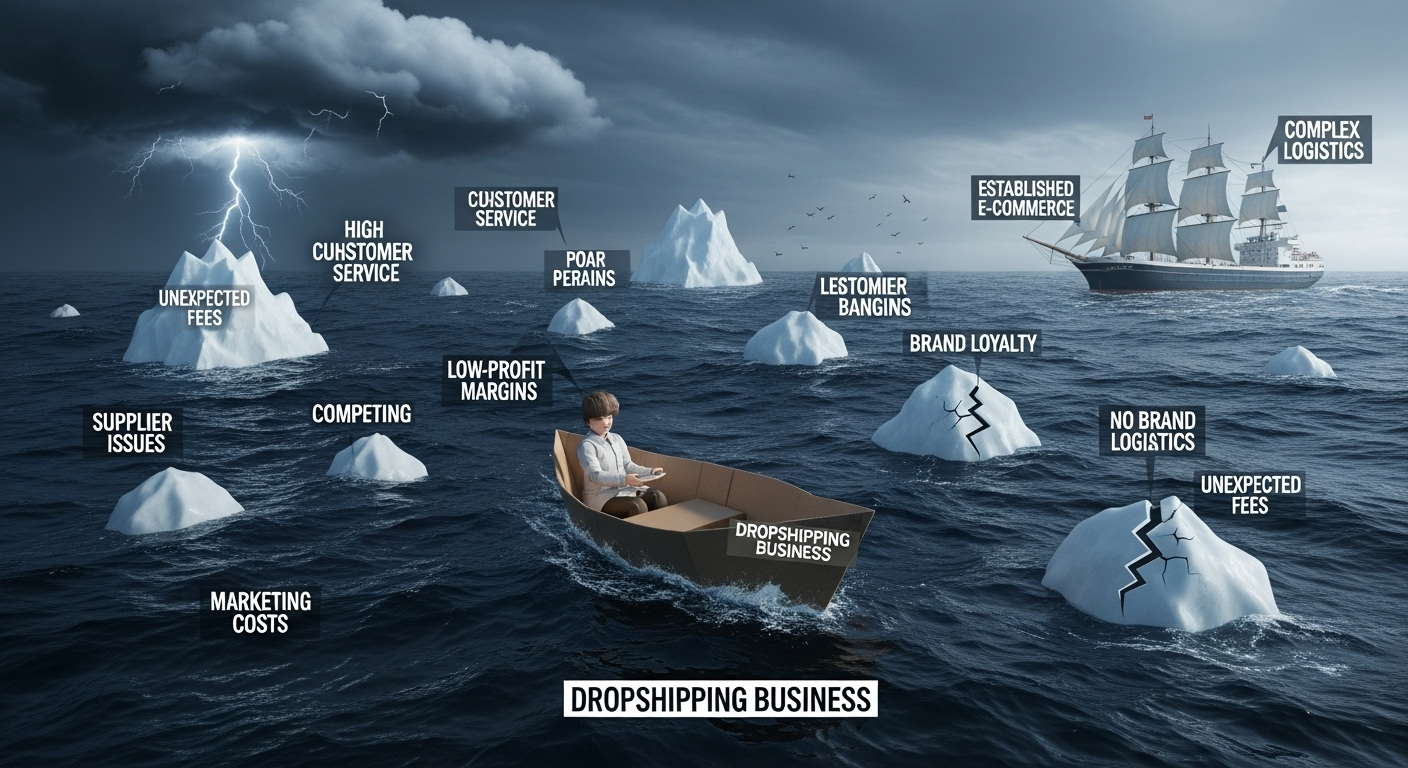
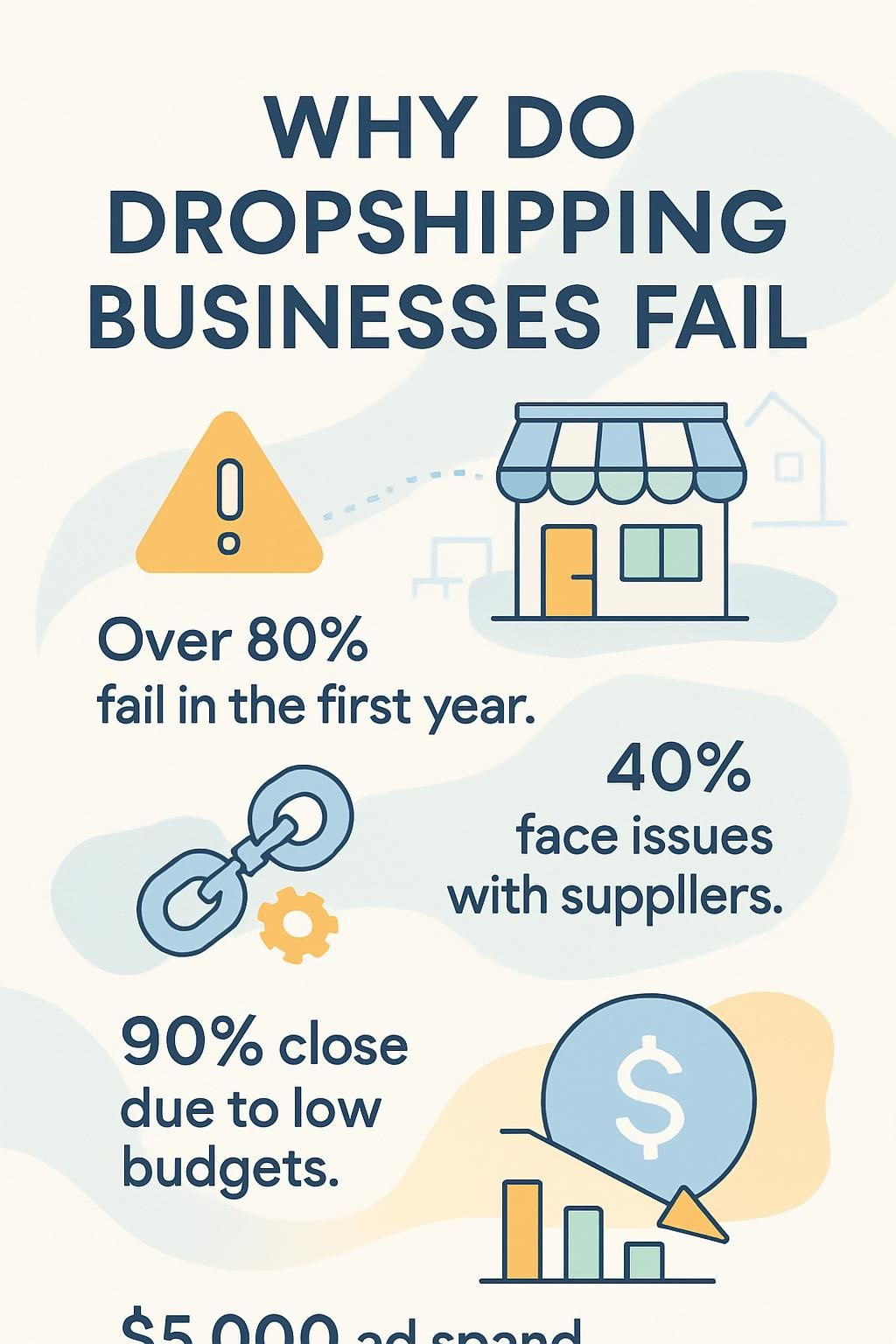
Many dropshippers launch their stores full of hope, but they often shut down fast due to big mistakes. One key fact shows that over 80 percent of these businesses fail in the first year.
This post breaks down the main reasons and shares tips to fix them. Discover how to win now.
Key Takeaways
- Over 80 percent of dropshipping businesses fail in the first year due to mistakes like poor research and bad suppliers.
- One dropshipper lost 40 percent of sales from shipping delays and customer complaints.
- Experts say 40 percent of dropshippers deal with quality issues from unreliable suppliers.
- Market research shows 90 percent of new stores close in months because of low budgets.
- One owner spent $5,000 on ads but sold only 20 items, leading to big losses.
Common Reasons Why Dropshipping Businesses Fail
Many dropshippers jump in without a solid plan–and boy, does that backfire (trust me, I’ve seen it happen too often). Dropshipping pros know the pitfalls, like picking bad niches or sketchy suppliers, can sink your shop fast…
so read on for the gritty details that could save your business.
Insufficient research and preparation
Dropshipping businesses often fail because owners skip deep market research. They jump in without checking demand for products. This leads to low sales and quick losses. Ecommerce experts warn that poor preparation ignores competition and customer needs.
A new seller picks trendy items but forgets to study trends; soon, the market saturates, and profits drop.
Suppliers play a big role too. Without solid research, dropshippers team up with unreliable ones, causing shipping delays and bad product quality. Customer service suffers from this mess (imagine angry buyers demanding refunds).
Business sustainability hangs on smart niche selection and planning, yet many ignore these steps, dooming their ventures to failure.
Choosing the wrong niche
Poor research ties right into another big mistake, picking the wrong niche in ecommerce. Dropshippers rush to sell hot items without checking demand or competition. They chase trends that fade fast, like viral gadgets that lose buzz overnight.
This hurts business sustainability, as sales drop when the market saturates. Niche selection matters a lot; aim for areas with steady interest but less rivalry (think pet supplies over generic electronics, for a laugh – who knew cat toys could outlast fidget spinners?).
Bad choices lead to low conversion rates and wasted effort on marketing strategies that flop. Suppliers might offer products, but if the niche lacks buyers, profits vanish. Online dropshippers face this trap often, ignoring market research that reveals true opportunities.
Competition grows fierce in oversaturated spots, squeezing out new players. Pick wisely to avoid these pitfalls and build a stronger store.
Partnering with unreliable suppliers
Even after picking a niche that seems promising, many dropshippers stumble by teaming up with shaky suppliers. Supplier selection can make or break a business (yeah, it’s that critical).
Unreliable partners often cause shipping delays that frustrate customers and tank conversion rates. They might send low-quality products, leading to returns and bad reviews. Dropshippers face inventory management headaches too, like sudden stockouts that kill sales momentum.
Ecommerce pros know this firsthand – one wrong choice here, and the whole operation suffers from poor product quality.
Dropshippers can spot red flags early by checking supplier reviews and testing small orders. Market research helps find trusted ones with solid track records. This step avoids the chaos of inconsistent deliveries and hidden fees that eat into profit margins.
Competition is fierce, so smart supplier picks boost customer service and keep buyers coming back. In the end, strong partnerships support business sustainability in this tough ecommerce world.
Ineffective marketing strategies
Many dropshipping businesses crash due to ineffective marketing strategies. They pour money into ads without clear plans. This leads to low conversion rates and wasted cash. Online dropshippers often skip targeting the right crowd.
Poor ad copy fails to grab attention. Social media posts lack punch, so customers scroll past. Without testing, these efforts flop fast. Ecommerce demands smart marketing to stand out in high competition.
Dropshippers ignore data from market research too. They chase trends blindly (hey, that sounds fun until sales tank). Bad strategies hurt business sustainability. Focus on proven tactics boosts results.
Pair marketing with strong customer service for better loyalty. Avoid these pitfalls to keep the venture alive.
Poor website design and user experience
A dropshipping store with bad design turns off customers fast. Shoppers click away if pages load slow or look messy. This hurts conversion rates in ecommerce. The expert sees it often – sites crammed with ads, hard-to-find products, no mobile friendly setup.
“Ouch, that’s a quick loss,” one might say (and trust me, it stings the profits). Fix it by keeping things clean, simple.
User experience matters big time too. Bad navigation leads to frustration, lost sales. Dropshippers ignore this and watch carts abandon. Keywords like poor website design scream trouble in market research.
Add clear calls to action, fast checkouts. It boosts trust, keeps buyers coming back. (Hey, who doesn’t love a smooth shop?).
Underestimating the importance of branding
Many dropshipping businesses fail because owners ignore branding. They treat their stores like plain online shops. Strong branding builds trust and sets a business apart in ecommerce.
Without it, customers see no reason to choose one store over another. Picture a generic site with no logo or story – it blends into the crowd (and who wants that?). Experts know branding boosts conversion rates and customer loyalty.
Owners often skip creating a unique voice or visual style. This leads to poor business sustainability. Reliable branding ties into marketing strategies and niche selection. It helps combat issues like shipping delays by making customers patient.
Focus on branding early to avoid these pitfalls in the competitive dropshipping world.
Operational Challenges in Dropshipping
Dropshipping sounds easy, but operations often trip people up–think about those endless waits for packages that make customers fume (yeah, we’ve all been there). Suppliers mess up stock levels too, leaving sellers scrambling to fix bad reviews and lost sales, so smart operators learn fast or sink quick.
Long shipping times
Long shipping times hurt dropshipping businesses a lot. Customers expect fast delivery these days, like two-day shipping from big sites. But dropshippers often deal with suppliers far away, say in China, causing waits of two to four weeks.
This leads to unhappy buyers and bad reviews. One dropshipper lost 40% of sales after complaints piled up about delays (talk about a buzzkill). Shipping delays tie right into poor customer service too.
Suppliers play a key role here. Pick ones with quick turnaround, or face refunds and lost trust. High competition makes this worse, as rivals offer faster options. Market research helps spot reliable partners early.
Focus on that to keep operations smooth and boost conversion rates.
Lack of control over product quality and inventory
Dropshipping means store owners do not hold stock. Suppliers handle the products. This setup limits control over product quality. Owners cannot check items before shipping. Bad suppliers send low-quality goods.
Customers get upset. Returns pile up. Refunds hurt profits. One expert notes that 40% of dropshippers face quality issues from poor supplier selection. Inventory management suffers too.
Suppliers run out of stock without warning. Orders delay. Sales drop in this competitive ecommerce world.
Supply chain problems add to the mess. Owners guess on stock levels. They rely on supplier updates. These often come late. Profit margins shrink from lost sales. Market saturation makes it worse.
Competition pushes for fast fixes. But without control, businesses struggle.
Poor customer service follows these issues.
Poor customer service
This lack of control over product quality and inventory often spills right into another big headache for dropshippers: poor customer service. Customers expect quick answers and real help when things go wrong, but many ecommerce sellers drop the ball here.
They ignore emails or give vague replies, which kills trust fast. Picture a buyer waiting weeks for a package due to shipping delays, then getting no update from the store (talk about adding insult to injury).
In this business model, suppliers handle most logistics, so dropshippers must step up with strong support to keep folks coming back. Bad service leads to refunds, bad reviews, and lost sales in a flash.
Dropshippers face tough competition, and weak customer service tanks conversion rates every time. One seller might promise fast fixes but fail to deliver, driving customers to rivals.
Market research shows that top stores shine by responding within hours, not days. They use chat tools or clear policies to build loyalty. Without that focus, even great products flop because buyers feel ignored.
Ecommerce thrives on happy customers, so skipping this part spells doom for business sustainability.
Limited profit margins due to high competition
High competition squeezes profit margins in dropshipping. Many sellers chase the same hot products, which drives prices down. Dropshippers face slim earnings after fees and ad costs eat into sales.
Market saturation makes it hard to stand out without unique value (like better customer service or branding). Ecommerce pros know that low margins often lead to business failure if sellers ignore this trap.
Suppliers add to the pressure with high product costs in crowded niches. Dropshippers cut prices to compete, but that slashes profits fast. Smart ones test small and track conversion rates to avoid losses.
Poor marketing strategies worsen the issue, as ads burn cash without enough returns. Operational challenges mount when inventory management falters amid fierce rivalry.
Financial Pitfalls in Dropshipping
Dropshippers jump in with skimpy budgets, and that spells trouble right from the start â yeah, it’s a classic rookie move (who hasn’t dreamed of easy
Starting with an inadequate budget
Many dropshipping businesses flop because owners start with too little money. They think a small budget covers everything, but costs add up fast (like ads, website fees, and tools).
Without enough cash, they can’t test products or fix issues. This leads to quick failure in ecommerce. Market research shows that 90% of new stores close in months due to poor funds.
Supplier selection suffers too, as cheap options often mean bad quality.
Business owners ignore hidden expenses, such as returns or marketing strategies that eat profits. They skimp on customer service to save bucks, which hurts conversion rates. Competition is fierce, and low budgets limit strong branding.
Ecommerce demands smart spending from day one.
Overspending on ads with low returns hits next, and it drains resources even more.
Overspending on ads with low returns
Dropshipping owners often pour money into ads without checking results. They run Facebook campaigns that cost hundreds per day. Returns stay low because ads target the wrong crowd.
This drains budgets fast in ecommerce. One owner spent $5,000 on ads last month but sold only 20 items (talk about a tough lesson). Suppliers wait for orders, yet profits vanish from these mistakes.
Smart dropshippers track every ad dollar. They test small budgets first to boost conversion rates. Poor marketing strategies lead to failure, no doubt. Business sustainability suffers when costs outpace sales.
Customer acquisition gets pricey without tweaks. A quick fix? Analyze data weekly and cut losers early (easier said than done, huh).
High product costs and hidden fees
High product costs eat into profit margins fast in ecommerce. Suppliers often charge more than expected, leaving little room for markup. Hidden fees add up, like customs duties or storage costs that surprise new dropshippers.
These extras hurt business sustainability and make competition tougher. Product sourcing becomes a headache when bills pile up without warning (imagine finding out about extra shipping charges after orders roll in).
Smart supplier selection helps spot these issues early, but many overlook them. Dropshippers face thin profits if they ignore these traps, especially in a crowded market. Customer acquisition suffers too when prices rise to cover costs.
This leads right into the big question: Can you lose money dropshipping?
Can You Lose Money Dropshipping?
Dropshipping can lead to real financial losses for many online sellers. They often pour cash into ads that flop, or pick suppliers who hike up costs with hidden fees. Ecommerce beginners might ignore market research and chase hot trends, only to face stiff competition and low conversion rates.
Consider this: a store launches with big dreams (hey, who doesn’t love quick wins?), but shipping delays kill customer trust fast. Product quality issues add fuel to the fire, sparking refunds and bad reviews.
Business failure hits hard when profit margins shrink due to poor niche selection.
Sellers lose money on inventory management mishaps too, like overstocking items that don’t sell. Marketing strategies fall flat without a solid plan, burning through budgets on weak campaigns.
Customer service slips also drive away buyers, cutting into sustainability. One wrong move in supplier selection, and returns eat up earnings. These pitfalls show how dropshipping demands smart choices to stay afloat.
So, how do sellers dodge these traps? Strategies to avoid dropshipping failures offer key steps forward.
Strategies to Avoid Dropshipping Failures
6. Strategies to Avoid.
Conduct thorough market research
Dropshipping experts always stress market research as a key step. It helps spot trends in ecommerce. Online dropshippers check customer needs first. They use tools like Google Trends to find hot products.
This cuts risks of business failure. Poor market research leads to bad niche selection. Experts look at competition too. They study what sells well. (And yeah, skipping this can doom your store fast.) Smart dropshippers analyze data on shipping delays and product quality.
They aim for business sustainability. Market research boosts conversion rates. It guides better marketing strategies. Dropshippers build a strong base this way.
Experts tie market research to customer service plans. They spot issues like inventory management early. This avoids common pitfalls. Online dropshippers gain an edge in supplier selection.
They pick partners that match market demands. Research shows what buyers want most. It reveals gaps in the market. Dropshippers use this info to stand out. Now, focus on a specific, profitable niche.
Focus on a specific, profitable niche
Dropshippers often pick broad markets and spread themselves thin. They chase every trend instead. A smart dropshipper zeros in on one niche. This choice boosts business sustainability.
Pick something you know well, like eco-friendly pet toys. Do solid market research first. Check demand with tools like Google Trends. Look at competition too. A crowded niche hurts profit margins.
Narrow niches build loyal customers. They improve conversion rates. Experts say targeted ads work better here. Avoid shipping delays by picking local trends. Strong niche selection ties into good supplier selection.
It leads to better product quality. One dropshipper (yeah, the one who failed big) ignored this and sold random gadgets. He lost big. Focus sharpens marketing strategies. It cuts ecommerce risks.
Test products before scaling
The expert advises testing products on a small scale first. Launch with low ad spend to see real demand. Track sales data and customer feedback right away. This step spots winners and weeds out losers fast.
Many fail by jumping into big orders without proof. Use tools like Google Analytics for quick insights on conversion rates. Spot issues with product quality early to avoid bad reviews.
One common trap hits when hype blinds the business owner to market research gaps.
Smart testing builds a strong base for growth. It cuts risks in this competitive ecommerce world. After solid tests show promise, the next key move involves partnering with trusted suppliers.
Partner with trusted suppliers
Dropshipping experts always stress supplier selection as key to success. A business picks trusted suppliers to avoid shipping delays and poor product quality. These partners ensure reliable inventory management and better customer service.
One owner shared how switching suppliers boosted conversion rates overnight (talk about a game-changer). Online dropshippers find vetted options through platforms like AliExpress or Oberlo, checking reviews and testing small orders first.
Bad choices lead to ecommerce headaches, like returns from faulty goods. Experts advise building relationships with suppliers who communicate well. This step cuts risks in the competitive dropshipping world.
A quick chat or sample request reveals a lot, folks. Strong supplier ties support business sustainability and help maintain profit margins amid market saturation.
Optimize website for conversions
He knows a slick website grabs attention fast. Dropshippers optimize for conversions by simplifying navigation. They cut load times to under three seconds. Shoppers hate waiting, right? Clear calls to action guide buyers straight to checkout.
Use bold buttons that say “Buy Now” instead of vague links. Test colors and layouts – what works for one niche flops in another (like red for urgency in fashion, but not gadgets). This boosts conversion rates in ecommerce.
Product pages shine with high-quality images and short descriptions. He adds customer reviews to build trust. Mobile-friendly designs matter since most traffic hits from phones. Avoid clutter; white space helps eyes focus.
Track analytics to spot weak spots, then tweak them quick. Partner this with solid marketing strategies, and sales climb without extra ad spend. Poor user experience kills businesses – fix it, and watch profits grow.
Create a clear and effective marketing plan
A dropshipping expert knows that a solid marketing plan drives sales. It outlines how to reach customers and boost conversion rates. Start by picking the right channels, like social media or email.
Set clear goals, such as gaining 1,000 visitors a month. Track what works with simple tools (hey, Google Analytics is free and easy). Adjust based on results to avoid wasting cash on bad ads.
This keeps marketing strategies sharp and effective.
Dropshippers often skip this step, but it saves headaches. Tie it to market research for better targeting. Use keywords that match searches in your niche. Build a plan around customer acquisition, not just random posts.
Test small campaigns first to see real returns. With competition high, a good plan helps stand out.
Now, let’s tackle if dropshipping is still worth it.
Is Dropshipping Still Worth It?
Dropshipping offers real chances for success in ecommerce, even with common pitfalls like business failure. Experts point out that smart market research and good supplier selection can turn things around.
Many online dropshippers earn steady profits by picking the right product niche and fixing shipping delays. Competition is high, but strong marketing strategies boost conversion rates.
Customer service plays a key role too (imagine keeping buyers happy with quick fixes). The business model still works if you manage inventory well and avoid market saturation.
People often wonder about profit margins in this setup. Dropshipping stays worth it for those who tackle operational challenges head-on. Focus on customer acquisition and product sourcing to stand out.
With low startup costs, it beats traditional retail (no big inventory headaches). Success stories show dropshippers making it big through better strategies. The key lies in learning from failures and adapting fast.
Conclusion
Many dropshippers overlook key pitfalls, leading to quick failures. They can turn things around with smart planning and solid strategies, you know? Success comes from learning these lessons (and maybe a bit of luck, too).
So, entrepreneurs should apply these tips to build a strong business that lasts.
FAQs
1. Why do so many dropshipping businesses fail right out of the gate?
Oh, you know, I’ve seen it happen a lot, poor niche selection trips up newbies who pick oversaturated markets like fashion gadgets without checking demand first. Then there’s the supplier mess, unreliable partners lead to shipping delays that kill customer trust. And don’t get me started on ignoring marketing (yeah, thinking sales will just happen magically, what a joke).
2. What role does bad marketing play in dropshipping failures?
Bad marketing sinks dropshipping stores fast, if you don’t target the right audience with ads, no one finds your products. I remember this one guy who blew his budget on generic Facebook posts, total waste.
3. How can choosing the wrong suppliers cause a dropshipping business to flop?
Picking shady suppliers means products arrive late or in poor quality, and customers bail with bad reviews. It ruins your rep quick, I’ve learned that the hard way from stories friends shared about scam vendors overseas.
4. Is market saturation a big reason dropshipping ventures crash and burn?
Yep, jumping into crowded niches like phone accessories without a unique angle spells doom, competition eats your profits alive. You gotta research trends early, or else you’re just another failed shop in the pile. (Trust me, I’ve dodged that bullet by niching down to eco-friendly pet toys, worked like a charm.)