

Many folks dream of launching a dropshipping business but worry about high startup costs. Dropshipping lets sellers avoid buying inventory upfront, which keeps expenses low. This blog post guides readers through simple steps to begin with just $100.
Discover how right now.
Key Takeaways
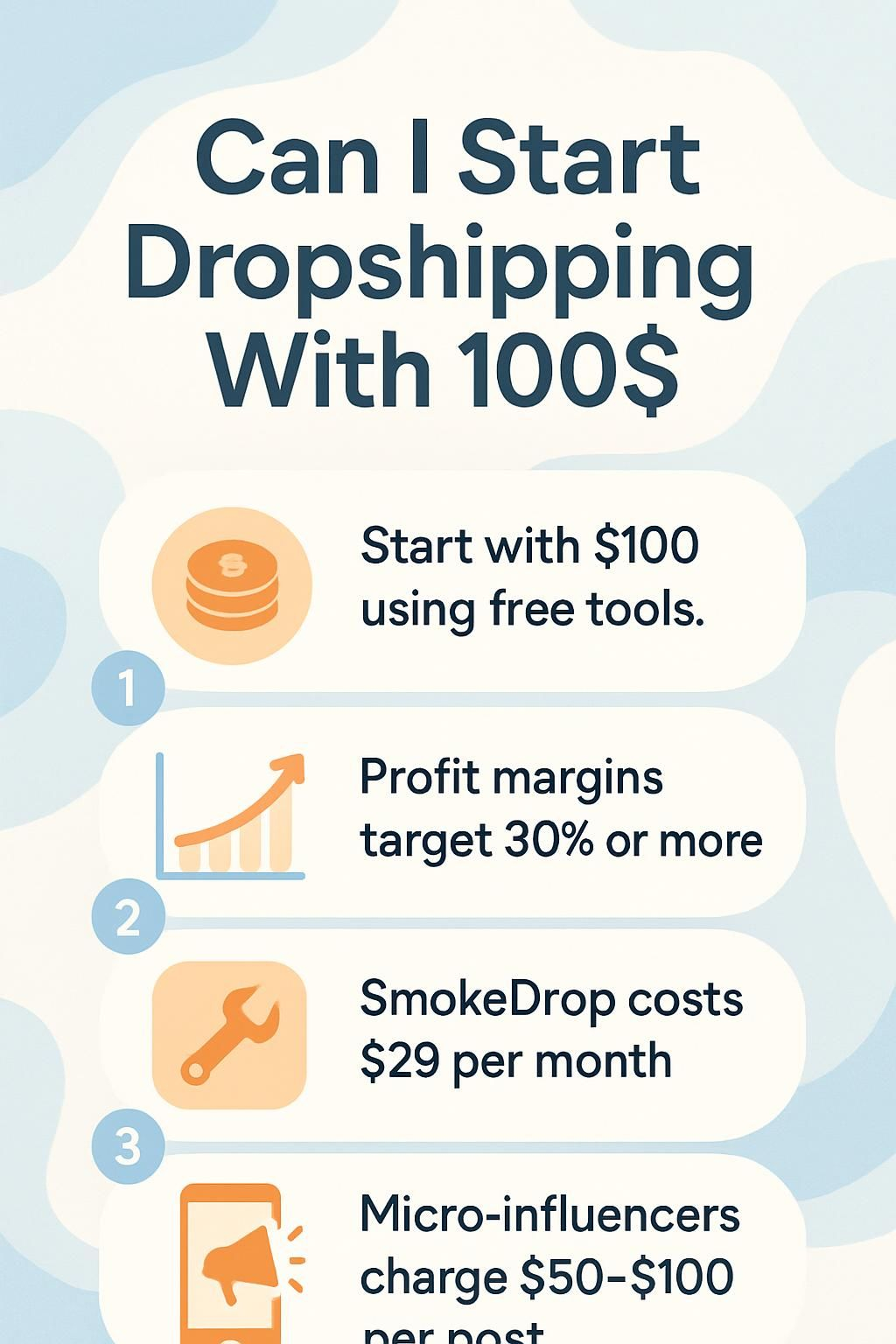
- Dropshipping starts with $100 by using free tools like Google Trends and Shopify’s 14-day trial.
- Aim for 30% profit margins; buy at $10 and sell at $20 for tidy profits.
- SmokeDrop costs $29 monthly; total startup can be $50 to $100.
- Micro-influencers with 1,000 to 10,000 fans charge $50 to $100 per post.
- Some sellers hit $1 million in sales by year three with smart planning.
Is It Possible to Start Dropshipping With $100?
Dropshipping offers a low-cost way to enter ecommerce. Startup costs can stay under $100 if you plan smart. Online business beginners often succeed by picking free tools and skipping big spends.
Profit margins grow when you source from cheap suppliers. Inventory management stays simple, no stock to buy upfront.
A dropshipper focuses on supplier sourcing first. This business model lets you sell without holding goods. Marketing strategies like free social posts keep expenses low. Financial planning helps track every dollar.
Many start small and build from there.
Find a Winning Product
The expert knows dropshippers often hunt for that perfect item to kick off their ecommerce journey. Pick products that solve real problems, like handy kitchen gadgets or fun pet toys.
Tools like Google Trends help spot rising searches without costing a dime. Look for items under $20 to keep startup costs low in this online business model. Suppliers on AliExpress offer cheap options, so test a few to see what clicks.
Dropshippers build success by eyeing profit margins early. Aim for at least 30% markup after fees to make the math work with just $100. Chat with suppliers to lock in good deals (hey, a little haggling goes a long way).
Free apps track trends, helping avoid flops. This step sets up strong inventory management from the start, turning small bets into steady wins.
Research High-Demand, Low-Competition Niches
After spotting a winning product, dropshippers move on to key research in ecommerce. They seek high-demand, low-competition niches to boost their online business. High demand means many buyers want items in that area.
Low competition gives new sellers a better shot at sales. Tools like Google Trends help spot these spots fast. Dropshippers check search volume and rival stores too.
Smart research ties into profit margins and supplier sourcing. It keeps startup costs low in this business model. Focus on niches like eco-friendly gadgets or pet accessories. These often show strong demand with few big players.
Test ideas with free tools to avoid high risks. This step builds a solid base for inventory management and marketing strategies.
Calculate Profit Margins
Once a dropshipper identifies high-demand, low-competition niches, they move on to crunch the numbers for profit margins. Profit margins show how much money stays in the pocket after costs in this online business model.
A dropshipper subtracts the supplier cost from the selling price, then divides by the selling price, and multiplies by 100 for the percentage (yeah, it’s that straightforward). They aim for at least 30% margins to cover startup costs and marketing strategies without dipping too deep into that $100 budget.
Dropshippers factor in hidden fees like shipping or transaction charges from platforms, keeping inventory management lean since no stock sits around. They use free tools, like spreadsheets, to track these in ecommerce setups.
One picks products where supplier sourcing keeps costs low, say $10 to buy and $20 to sell, netting a tidy profit. This step in financial planning helps avoid flops and builds a solid foundation, especially when every dollar counts in dropshipping.
Use Free Trials on Platforms Like Shopify
Shopify gives dropshippers a smart way to cut startup costs in ecommerce. The platform offers a free trial that lasts 14 days. Users build an online store during this time without paying upfront.
They pick themes, add products, and set up payments. This fits a tight budget like $100. Dropshippers test the business model before spending more. One expert notes, “It’s like dipping your toes in the water – no big splash needed.”.
Tools integrate easily with Shopify for supplier sourcing and inventory management. Free trials let users explore features that boost profit margins. They avoid high fees by starting small.
A dropshipper focuses on marketing strategies right away. (Hey, who doesn’t love free stuff that builds an online business?) This approach keeps financial planning simple and effective.
Explore Free or Affordable Store-Building Tools
Dropshippers often seek low startup costs in ecommerce. They can use tools like WooCommerce, which runs free on WordPress sites. This setup lets users build an online business without big fees.
Add plugins for supplier sourcing and inventory management at little cost. One dropshipper started with just a domain name, costing under $20 a year (talk about a steal). The platform handles basic designs, so no need for fancy coders.
Big Cartel offers free plans for small stores, perfect for testing the business model. Users upload products fast and link to marketing strategies on social media. Keep profit margins in mind by picking affordable themes.
Financial planning stays simple this way, avoiding hidden charges. A quick tip: check Gumroad for even cheaper options, where creators sell digital goods alongside dropshipping items.
Integrate Tools Like AutoDS for Product Sourcing
The dropshipping expert recommends tools like AutoDS to simplify supplier sourcing in your online business. This platform automates product finding and inventory management, which cuts startup costs.
It connects you to reliable suppliers fast, so you source items without holding stock. Plus, AutoDS handles order fulfillment, freeing time for marketing strategies. (Imagine skipping those endless supplier hunts – what a relief for new ecommerce starters.).
AutoDS offers features that boost profit margins through smart pricing tools. Users import products from places like AliExpress with ease. The system tracks trends in high-demand niches, aiding your business model.
Integrate it with Shopify for seamless operations, all while keeping financial planning tight on a $100 budget. Test a few products first to see quick results in your dropshipping venture.
Leverage Free Social Media Platforms (TikTok, Instagram)
Dropshippers often turn to free social media for smart marketing strategies. Platforms like TikTok and Instagram offer big reach without high startup costs. Users post short videos that show products in action.
This draws in buyers fast. One expert shares how a quick TikTok clip boosted an ecommerce store’s traffic overnight (talk about a game-changer). Focus on fun content that fits your online business niche.
Hashtags help spread the word organically.
Instagram stories let dropshippers connect directly with fans. Share behind-the-scenes looks at supplier sourcing or daily deals. This builds trust and keeps costs low in the business model.
A simple poll can reveal what customers want, aiding inventory management. Micro-influencers sometimes collaborate for free shoutouts, expanding your reach. Track likes and shares to refine financial planning.
Dropshipping thrives on these tools, turning small efforts into real profit margins.
Use Free Ad Credits Where Available
Many platforms offer free ad credits to new users in the dropshipping world. Facebook Ads gives $10 to $50 in credits for starters. Google Ads provides up to $100 for first-timers.
These credits help test marketing strategies without spending your own cash. A dropshipper grabs these deals to run small campaigns and attract early customers. This approach fits tight startup costs in an online business.
Platforms like TikTok sometimes hand out free credits too. Use them to boost posts and reach more eyes. Track results to see what works for your ecommerce setup. Free credits stretch your $100 budget far.
They support smart financial planning in dropshipping.
Now, let’s talk about how to create engaging content to attract customers.
Create Engaging Content to Attract Customers
Free ad credits help kick off visibility, and dropshippers can build on that by crafting content that draws in crowds without extra costs. They post fun videos on TikTok showing product demos, like “Hey, check out this cool gadget in action!” (Who doesn’t love a quick laugh?).
Dropshippers keep it real with behind-the-scenes stories or customer tips, turning followers into buyers in the ecommerce world.
Dropshippers focus on high-demand niches to spark interest, using polls or questions to chat with the audience. This boosts organic reach in online business, saving on startup costs.
They track what works, like viral posts, and tweak for better profit margins… simple stuff that grows the dropshipping venture.
Partner With Micro-Influencers for Affordable Promotions
Micro-influencers offer a smart way for dropshippers to boost their online business on a tight budget. These creators have smaller followings, often 1,000 to 10,000 fans, but they build strong trust in niches like fashion or gadgets.
A dropshipper finds them on platforms like Instagram or TikTok, then offers free products or small payments for shoutouts. This marketing strategy drives real traffic without huge startup costs, and it fits the dropshipping business model perfectly.
(Hey, it’s like getting word-of-mouth buzz, but online and amplified.).
Dropshippers calculate potential profit margins before teaming up, to ensure the deal makes sense for financial planning. They reach out with a simple pitch, “Love your content, want to collab?” Many micro-influencers charge just $50 to $100 per post, way cheaper than big names.
This approach leverages supplier sourcing for quick fulfillment, keeping inventory management easy. Dropshippers track results through link clicks and sales, adjusting as needed for better ecommerce growth.
Now that marketing hums along, the focus shifts to managing costs effectively.
Minimize Upfront Expenses
Dropshipping beginners often face high startup costs. The expert suggests starting small. Choose free tools for your online business. Skip fancy designs at first. Use open-source platforms to build your ecommerce store.
This keeps expenses low right from the start.
Focus on inventory management without buying stock upfront. Source suppliers through free directories. Negotiate better terms with them. Track every dollar in financial planning. Profit margins grow when you avoid big spends early on.
A smart business model saves cash for marketing strategies later.
Focus on Organic Marketing Strategies
Organic marketing strategies help dropshippers grow their online business without big ad spends. They build traffic through free methods like SEO and content creation. A dropshipper posts helpful blog articles on ecommerce trends.
This draws in customers searching for tips on startup costs or profit margins. Social media shares boost visibility too. Friends and followers spread the word naturally.
Dropshippers focus on consistent posts to engage audiences. They share product stories or quick videos on platforms like Instagram. This fosters trust and drives sales in the business model.
Inventory management tips in posts attract repeat visitors. Financial planning advice keeps costs low. Over time, these efforts turn followers into buyers.
Avoid Overordering Inventory
Dropshippers know inventory management keeps startup costs low in this online business. Order only what sells, based on real demand from your ecommerce store. Skip bulk buys from suppliers right away; that ties up your limited cash.
Test small first, like sourcing one or two items through reliable supplier sourcing. This way, profit margins stay healthy without waste.
Smart financial planning means watching every dollar in dropshipping. If a product flops, you lose less. Use data from early sales to guide orders. Build your business model around just-in-time shipping to cut risks.
Now, let’s talk about reinvesting profits to scale.
Reinvesting Profits to Scale
Dropshippers often pour early earnings back into their business to grow fast — think smarter ads and fresh products that pull in more buyers. Keep reading to see how small tweaks, like site tweaks for quick sales (yeah, they add up), turn tiny profits into big wins.
Upgrade Marketing Campaigns
Dropshipping pros know profits can fuel better ads. Use earnings to boost paid campaigns on platforms like Facebook or Google. Start small, test what works, and scale up winners. This lifts your online business reach without big startup costs.
A dropshipper reinvests $50 from sales into targeted Instagram ads (hey, that’s where trends pop). Focus on high profit margins by picking ecommerce niches with low competition. Track results, tweak strategies, and watch customer traffic grow fast.
Expand Product Offerings
After upgrading marketing campaigns brings in more sales, expanding product offerings becomes the next smart move for dropshippers. Add new items that fit your niche, like trending gadgets or accessories, to boost online business growth.
Research suppliers through tools like AutoDS for easy sourcing, and focus on high profit margins to keep costs low. This step helps avoid big startup costs, since dropshipping means no inventory management upfront.
Dropshippers often find success by testing one or two new products at a time (hey, why risk it all on a hunch?). Use profits from early sales to source from reliable suppliers, building a stronger ecommerce store.
Keep an eye on financial planning, so each addition supports the business model without extra spending. Organic growth like this turns small wins into bigger opportunities, you know?
Optimize Your Website for Better Conversion Rates
Once you expand your product offerings, the next smart move turns to making your online store work harder for those sales. Dropshippers often overlook simple tweaks that boost conversion rates in their ecommerce setup.
Start by speeding up your site load times, folks – nothing kills a sale faster than a slow page (and trust me, customers bolt quick). Add clear calls to action, like big “Buy Now” buttons, and use high-quality images to show off products.
Test different layouts to see what clicks with buyers, keeping profit margins in mind as you refine.
Dropshipping pros know that good user experience ties right into better financial planning for your online business. Make navigation easy so shoppers find items fast, without hassle.
Include customer reviews to build trust, and optimize for mobile devices since most traffic comes from phones these days. Track what works with free tools, then adjust – it’s all about turning browsers into buyers on a budget.
How Much Money Do I Need to Start Dropshipping With SmokeDrop?
SmokeDrop makes dropshipping easy for online business starters. This platform handles supplier sourcing and inventory management without big upfront fees. A user pays a monthly subscription starting at $29 for basic access.
Add $14 for a Shopify store trial to set up ecommerce basics. Marketing strategies fit into financial planning with free social media options. Profit margins grow as sales roll in, keeping costs under control.
Folks often start with just $50 to $100 total (yeah, that covers the essentials). The business model skips buying stock, so no cash ties up there. Focus on low startup costs like domain names for $10 a year.
One expert tip: track every dollar in a simple spreadsheet. This way, a dropshipper builds momentum fast, turning small investments into real wins.
What Do You Need to Start Dropshipping With SmokeDrop?
After figuring out the low startup costs for dropshipping with SmokeDrop, the next step involves gathering the key items to launch your business. This setup keeps things simple and affordable. You can get started with basic tools and a clear plan.
- A computer or smartphone acts as your main device for managing the store and orders. Dropshippers use it to access platforms, research products, and handle supplier sourcing without extra costs. This tool lets you work from anywhere, making online business flexible and easy to start.
- An internet connection powers all your ecommerce activities. It helps with finding high-demand niches, calculating profit margins, and marketing strategies on social media. Without it, you miss out on quick updates and customer interactions in this business model.
- A Shopify account serves as your store base, often with a free trial to test the waters. Integrate SmokeDrop here for smooth inventory management and product listings. This setup avoids big upfront expenses and focuses on startup costs that fit a tight budget.
- A SmokeDrop subscription provides access to suppliers and automated tools. It streamlines order fulfillment, reduces manual work, and supports financial planning by tracking sales. Many dropshippers start with the basic plan to keep things lean.
- Product research tools, like free ones such as Google Trends, help spot winning items. They guide you in low-competition areas for better profit margins. Use them to build a strong foundation in your online business without spending much.
- Social media accounts on platforms like Instagram or TikTok drive free marketing. Create content to attract buyers and build your brand. This approach boosts visibility and supports organic growth in dropshipping.
- A payment processor, such as PayPal or Stripe, handles transactions securely. It ensures smooth cash flow and builds trust with customers. Set it up early to manage revenue from the start.
- Basic knowledge of dropshipping basics comes from free online resources. Learn about supplier sourcing and business models through videos or forums. This education helps you avoid common pitfalls and grow confidently.
Can I Become a Millionaire by Dropshipping?
Many people dream of hitting it big in dropshipping. This business model lets sellers build an online business without holding inventory. Success stories show some dropshippers earn millions.
They focus on smart supplier sourcing and strong marketing strategies. Profit margins play a key role too. One seller started small and scaled to over $1 million in sales by year three.
Hard work and good financial planning make it possible. Dropshipping offers low startup costs, which helps beginners aim high.
Luck alone won’t cut it in ecommerce. Sellers must test products and tweak their approach often. Consistent effort turns small wins into big profits. Some use free tools to cut costs and boost growth.
This path demands patience, folks – “get rich quick” schemes rarely work. Now, learn how to run dropshipping websites through Shopify with SmokeDrop.
How to Run Dropshipping Websites Through Shopify With SmokeDrop
Dropshipping experts often integrate tools like SmokeDrop with Shopify to streamline ecommerce operations. This setup helps online dropshippers manage inventory without high startup costs.
- Online dropshippers first install the SmokeDrop app from the Shopify App Store. They connect it to their store in just a few clicks. This step sources products from suppliers without upfront inventory management. Dropshippers then browse SmokeDrop’s catalog for items that fit their niche. They import selected products directly to their Shopify site. The app handles supplier sourcing automatically, which cuts down on manual work.
- Dropshippers set up automated order fulfillment next. When a customer buys something, SmokeDrop sends the order to the supplier. The supplier ships it straight to the buyer. This business model keeps things simple and avoids overordering inventory. Dropshippers track all orders through the app’s dashboard. It shows real-time updates on shipments and profits.
- Profit margins get a boost with SmokeDrop’s pricing tools. Dropshippers adjust prices to ensure good returns after fees. They calculate costs like Shopify subscriptions and marketing strategies. The app provides data on high-demand items. This helps in financial planning for the online business. Dropshippers aim for margins above 20 percent to grow.
- Marketing strategies tie in by using SmokeDrop’s product data for ads. Dropshippers create listings with high-quality images from the app. They promote on social media to drive traffic. The integration supports quick updates if prices change. This keeps the store competitive in ecommerce.
- Dropshippers monitor performance with built-in analytics. SmokeDrop tracks sales and customer data. They use this to refine their approach. Regular checks help spot issues early. The app also offers tips on scaling the business model.
These steps make running a dropshipping site smooth, so now explore tips for success with a limited budget.
Stay Consistent and Patient
Consistency matters a lot in dropshipping. An online dropshipper sticks to daily tasks like posting content or checking sales. This builds momentum over time. Patience plays a key role too (yeah, it’s tough when profits seem slow).
Results often show after weeks or months of steady effort. Ecommerce beginners face ups and downs, but staying the course helps overcome them.
Smart dropshippers track progress without rushing. They focus on small wins in their online business. Profit margins grow as they refine marketing strategies. One avoids burnout by setting realistic goals.
This approach turns startup costs into real gains, bit by bit.
Monitor Revenue and Costs Closely
Patience pays off in dropshipping, but tracking numbers keeps the business alive. An expert watches revenue and costs like a hawk. This means checking sales daily to spot trends in profit margins.
Low startup costs help, yet small leaks in expenses can sink an online business fast. Use free tools like spreadsheets to log every dollar from supplier sourcing to marketing strategies.
Dropshippers succeed by reviewing numbers weekly. They cut waste in inventory management and boost ecommerce growth. One mistake, like ignoring hidden fees, hurts the business model.
(Hey, even pros slip up sometimes – learn from it.) Financial planning turns $100 into real wins, as long as checks stay regular.
Continuously Test and Improve Strategies
Dropshippers test new ideas in their online business often. They try different marketing strategies to boost profit margins. One checks ad results every week. This helps spot what works in ecommerce.
A seller changes product photos if sales drop. Quick tweaks improve inventory management and supplier sourcing.
Success comes from steady checks in the business model. Dropshippers track startup costs against earnings. They adjust financial planning based on data. For example, switch to better niches after tests.
Keep experimenting to grow without big risks. (Hey, even small changes can lead to big wins, right?).
Conclusion
Anyone can launch a dropshipping business with just $100, if they pick smart products and use free tools. He builds his store on Shopify’s trial, markets on social media without spending a dime, and watches profits grow.
Keep testing ideas (hey, what works today might surprise you tomorrow), stay patient, and scale up as cash flows in – that’s the real path to success.
FAQs
1. Hey, can I really start dropshipping with just $100?
Yeah, you can kick off a dropshipping business with that small budget, I mean, it’s tight but doable if you pick cheap tools and free resources (like, who needs fancy stuff right away?). Focus on low-cost suppliers, and you’ll see it’s possible to get your online store up without breaking the bank. Just remember, my first try was similar, and it taught me patience is key.
2. What should I spend my $100 on when starting dropshipping?
Spend it wisely on a domain name and basic hosting for your ecommerce site. That leaves room for a bit of ad spend on social media to test the waters.
3. Do I need experience to launch a dropshipping venture with only $100?
No experience? No problem, plenty of free tutorials online can guide you through setting up your store and finding reliable suppliers (I learned everything from YouTube, believe it or not). Start small, like picking trendy gadgets or apparel as your niche products. With that budget, trial and error becomes your best teacher, turning rookies into pros quick.
4. Can I make a profit starting dropshipping on a $100 shoestring?
Sure, profits are possible if you nail product selection and keep overhead low, but expect slow growth at first. Use free marketing tricks, like posting on forums or social groups, to draw in customers without extra cash. I once flipped a few sales that way, and it snowballed from there, proving even a tiny investment can pay off with smart moves.